
Episode Summary: Listen as our hosts discuss the intensity of the experiences of infection preventionists (IPs) during the first 9 months of the COVID-19 pandemic through input gleaned from IPs in rural, urban, and suburban settings. These experiences serve to highlight the important role of IPs in pandemic preparedness, emergency management, and crisis standards of care.
Our interviews are based on the following AJIC articles:
Rural Infection Preventionists’ Experiences During the COVID-19 Pandemic: Findings From Focus Groups Conducted with Association for Professionals in Infection Control & Epidemiology (APIC) Members
Infection Preventionists’ Experiences During the First Nine Months of the COVID-19 Pandemic: Findings From Focus Groups Conducted with Association for Professionals in Infection Control & Epidemiology (APIC) Members
Authors: Terri Rebmann, PhD, RN, CIC, FAPIC, Rebecca T Alvino, RN, MS, CNS, CIC, Rachel L Mazzara, BS, Jessica Sandcork, BS, MPH
Guests
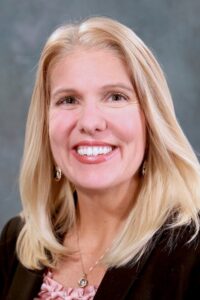
Terri Rebmann PhD, RN, CIC, FAPIC
Dr. Terri Rebmann is the Special Assistant to the President, Director of the Institute for Biosecurity, and a Professor of Epidemiology in the Saint Louis University College for Public Health & Social Justice. She is a PhD Nurse researcher with an emphasis in infectious disease emergency preparedness.
In addition, she is board certified in Infection Prevention and Epidemiology and an APIC Fellow. Her past work experience includes research and clinical practice with HIV/AIDS patients and hospital infection prevention and epidemiology. In her current role as Special Assistant to the President, she is responsible for helping to manage and inform Saint Louis University’s COVID-19 response. In her current position with the Institute for Biosecurity as the Director, she is responsible for managing all aspects of the Institute’s Certificate, MPH, and PhD academic programs, as well as conducting research.
Her research areas of focus include healthcare and public health professional disaster preparedness, long-term use of respiratory protection, and addressing barriers to vaccine uptake. She publishes and lectures on bioterrorism, pandemic planning, emerging infectious diseases, and infection prevention practices on a national basis. Dr. Rebmann has served on several national and international task forces and committees aimed at minimizing morbidity and mortality related to emerging infectious diseases and bioterrorism threats. Examples include being a member of the Association for Professionals in Infection Control and Epidemiology (APIC) COVID-19 Task Force, a member of the APIC Ebola Task Force, and being a former member and Chair of the APIC Emergency Preparedness Committee.

Rebecca Alvino, RN, MS, CNS, CIC
Rebecca Alvino is the Field Unit Manager for Hospital Epidemiology and Infection Prevention at UCSF Health, specializing in perioperative and procedural infection prevention. Originally beginning her career in public health during the early years of West Nile virus in Upstate New York, Rebecca became a surgical nurse in 2005—building the foundation for her knowledge and skills in perioperative and procedural infection prevention.
Rebecca joined UCSF Health in 2013 as an infection preventionist, and concurrently continued her work as a surgical nurse on a per diem basis until COVID-19 arrived at UCSF Health in early February 2020, when her work shifted exclusively to infection prevention and control. In addition to her work as an infection preventionist and as a surgical nurse, Rebecca periodically works as an academic coach with the University of Texas-Arlington for their RN-to-BSN program.
Rebecca graduated from the University at Albany, State University of New York with a bachelor’s degree in human biology, St. Joseph’s College of Nursing in Syracuse, New York with an associate’s degree in nursing, and the University of California, San Francisco with her master’s degree specializing in advanced public health nursing and minor in global health. She was inducted into Sigma Theta Tau in 2013, and is a member of several professional organizations, including AORN and IAHCSMM. She is the infection prevention advisor for the California Central Service Association, and an active member of APIC, where she serves as a director for the board of the San Francisco Bay Area chapter and is a member of the APIC’s Annual Conference Committee.